
One of the biggest worries parents have before travelling with kids is “What happens if they get sick?”
It’s a fair question – and it does happen. Managing sickness while travelling with kids can feel daunting, but having a plan makes a huge difference.
Whether it’s a runny nose, fever, an upset tummy or something more serious, looking after a sick child is stressful enough at home – let alone in another country.
The reality is that kids get sick whether you’re at home or travelling. Being overseas just means you sometimes need to think a little differently about being prepared – and it shouldn’t deter you from going.
Between us, we’ve travelled with our daughters across Australia, Asia, Europe and the Middle East, and like every family, we’ve had our fair share of illnesses, pharmacy visits and unexpected emergency medical situations along the way.
Here are some of the biggest lessons we’ve learned.
1. Accept That Kids Will Get Sick
As much as we’d all love to avoid it, getting sick is part of being a kid.
Whether you’re at home or overseas, kids will pick up viruses, develop fevers and sometimes wake up just feeling miserable.
Rather than letting the fear of sickness stop you from travelling, let’s focus on being prepared.
Knowing you have a plan can make even stressful situations feel much more manageable.
2. Look After Your Health Before You Travel
Prevention isn’t always possible, but healthy habits can certainly help.
Carly’s family swear by starting each day with fresh ginger and lemon, while also prioritising sunshine, movement and eating as many whole foods as possible while travelling.
Carly also shared how travelling with endometriosis requires extra planning, from knowing her triggers to making sure she gets enough rest when symptoms flare up.
Everyone’s health looks different, so understanding your own body before you travel is just as important as preparing for your children.
3. Know Where to Get Medical Help
One of the first things we do after arriving somewhere new is work out where we can get help if we need it.
That includes finding:
- The nearest hospital
- A local doctor or medical clinic
- The closest pharmacy
- Emergency phone numbers
We’ve found healthcare incredibly accessible in some of the places we’ve travelled. In Thailand and Bali, for example, we’ve often been able to get help or advice through local pharmacies, and in some places doctors can even visit your hotel if you’re too unwell to travel.
Hopefully you’ll never need any of it – but if you do, you’ll be glad you’ve done the research before an emergency happens.
Bonus tip: If you’re heading somewhere remote, especially an island with limited medical facilities, make sure you have a plan for getting back to the mainland if you need urgent medical care. This is something we’ve had to think about while living and travelling in Thailand.
When we stayed on a tiny climbing island in Thailand with no doctor, pharmacy or hospital, we had the WhatsApp number of a local boat driver and an understanding that we could call him any time of the day or night if we needed help.
Hopefully you’ll never need it, but having an exit plan gave us real peace of mind. If you’re travelling somewhere remote, it’s also worth carrying some emergency cash just in case you need transport quickly.
4. Pack a Small Travel Medicine Kit
We also make sure a small medicine kit comes with us whenever we’re heading out for a day of exploring.
It usually includes:
- Paracetamol
- Nurofen
- Liquid antihistamine
- Antibiotic cream
- Saline water
- A thermometer
- Oral syringes
- Hydralyte
On travel days, we keep it in our carry-on rather than checked luggage so the basics are always close by.
If someone becomes unwell during a flight or your luggage is delayed, you’ll have the basics close by.
As always, speak to your own doctor or pharmacist about what medications are appropriate for your family before you travel.
We also share more of our carry-on essentials in Part 2 of our Flying With Kids series.
5. Translation Apps Can Be Lifesavers
One of the best travel tools we’ve discovered isn’t actually a travel gadget at all.
It’s an app.
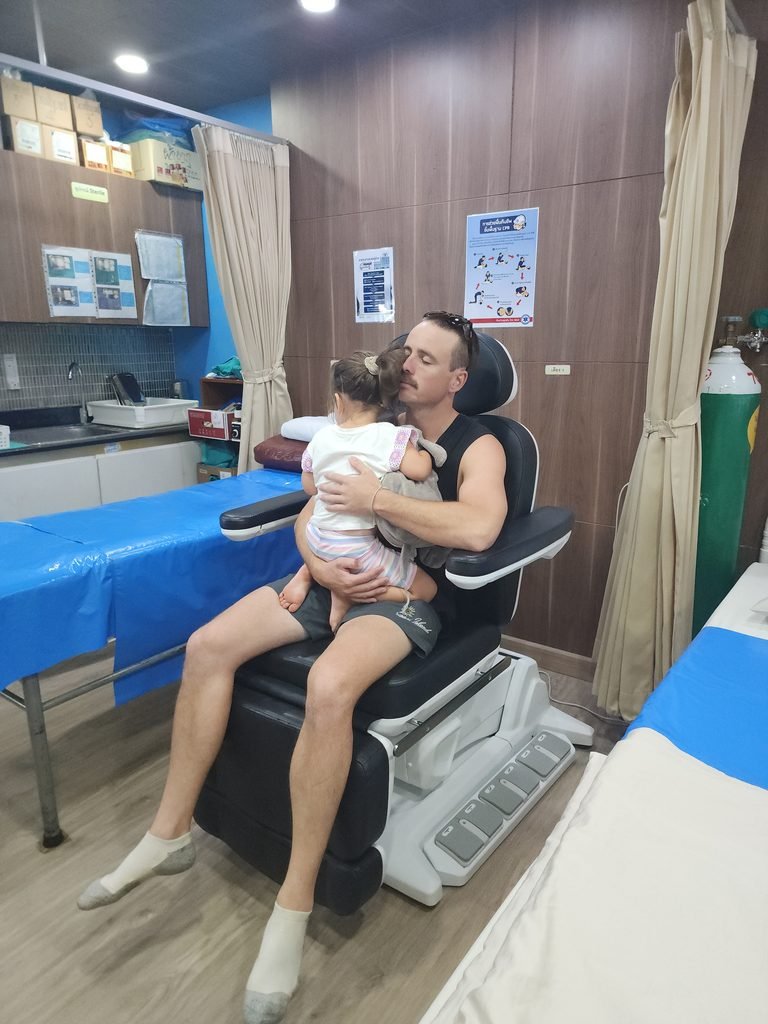
When Kaia needed urgent medical treatment overseas after potential rabies exposure, being able to explain exactly what had happened using live translation made the whole experience that bit less stressful.
Whether you use Google Translate, ChatGPT or another translation app, having one downloaded before you travel can be incredibly helpful if you find yourself needing medical assistance in another language.
We use Google Translate and make sure we have the local language downloaded offline so you don’t need data or internet to use it.
6. Travel Insurance Isn’t Where We Cut Corners
Travel insurance is one expense we never skip.
We know it can feel like just another cost when planning a holiday, but serious medical emergencies overseas can be incredibly expensive.
Over the years we’ve used different providers depending on where we’ve been travelling and what activities we’ve been doing. At the moment we’re using SafetyWing because it suits the way we travel full-time across multiple countries and its low cost.
Our biggest priority is always emergency medical cover.
Everything else is secondary.
We genuinely hope travel insurance is money you never need to use – but if something does go wrong, it can make an incredibly difficult situation much easier to manage.
7. Preparation Builds Confidence
One thing we’ve learned over years of travelling is that confidence doesn’t come from hoping nothing goes wrong.
It comes from knowing you’ll be able to handle it if it does.
For us, that means having a few basics in place:
- A small first aid kit
- A translation app
- A taxi number
- Travel insurance
- Knowing where the nearest pharmacy is
None of these things guarantee a perfect trip, but together they help you feel much more prepared if the unexpected happens.
Final Thoughts
Travelling with kids doesn’t mean you’ll avoid sickness.
It simply means you’ll sometimes be managing it somewhere new.
Fortunately, most illnesses are minor, and with a little preparation, they don’t have to ruin your trip.
The goal isn’t to eliminate every risk.
It’s to travel knowing you’ve done everything reasonable to prepare.
Every family travels differently, and that’s okay. These are simply the lessons we’ve learned through our own adventures. Take what works for your family, leave what doesn’t, and keep exploring.
Listen to the Full Episode
In Episode 4 of the Kids Who Travel Podcast, Renee and Carly share their experiences managing sickness while travelling with children, from packing a travel medicine kit and finding local pharmacies to preparing for medical emergencies and choosing travel insurance.
If you’ve ever worried about what happens if your child gets sick overseas, this episode is full of practical advice, honest stories and the lessons we’ve learned through experience.
Have a travel health tip that’s helped your family? We’d love to hear it. Connect with us on Instagram @kidswhotravelpodcast and share your experiences.