
Transport is one of those parts of family travel you don’t think too much about until you land somewhere new and realise you have a kid, bags, no real idea where you’re going and three different ways of getting there.
Do we actually need a car? Is the public transport any good? Can we just walk? Is hiring a scooter safe? Is Grab or Uber reliable here? How much are we willing to pay for convenience?
Getting around with kids abroad has looked completely different for us depending on where we’ve been. Between our two families, we’ve used public transport, hired cars for months, rented scooters, relied on taxis and ride-share apps, and our family even ended up buying both a car and a scooter while living in Thailand!

There isn’t one transport option we’d recommend everywhere. What works in Istanbul might make no sense in rural Türkiye. A scooter can feel completely normal in Thailand but not somewhere else, and public transport can be brilliant in one city and almost nonexistent in the next.
So rather than asking what the best way to get around with kids is, we look at where we are, how long we’re staying and what will actually make day-to-day life easier.
Do We Actually Need a Car?
Carly’s family has become very comfortable using public transport. In Türkiye, they’ve lived in Istanbul, Antalya and Kalkan and have generally managed day-to-day life without owning a car.
For us, the answer has been different. When we spent three months in Türkiye, we hired a car once we reached Antalya because we were rock climbing every second day outside the city. There was technically a bus to the climbing area, but with a six-month-old, catching a bus at five in the morning and waiting until late afternoon to return wasn’t exactly practical.
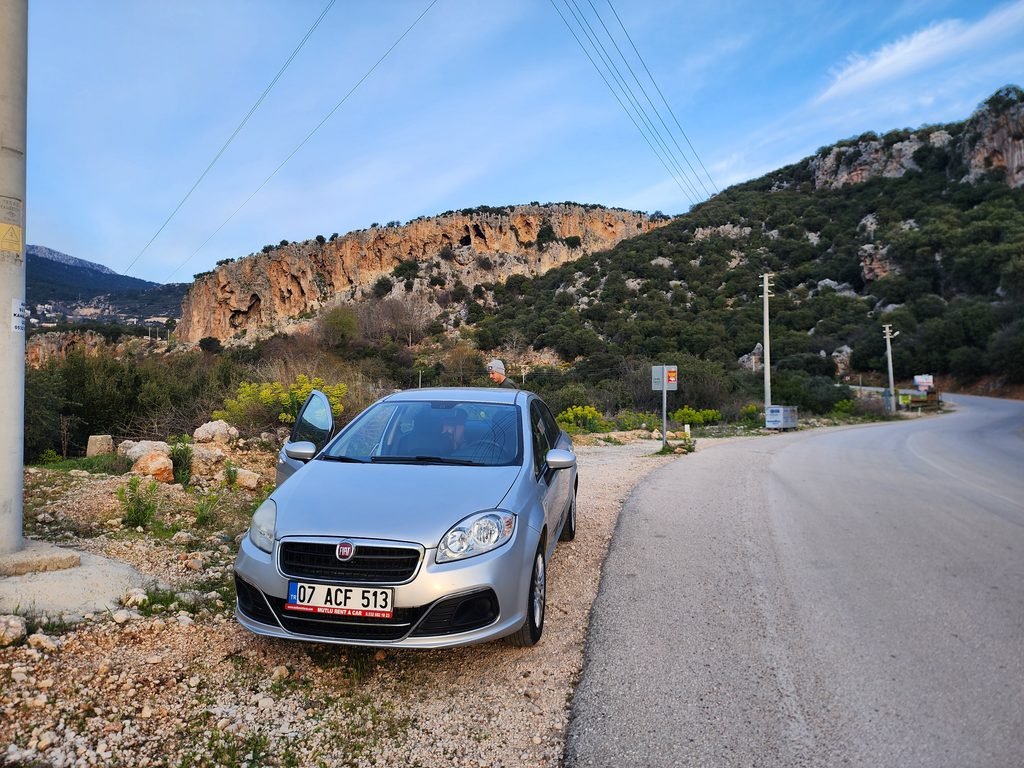
Having a car meant we could work around Kaia’s naps, meals and general mood instead of trying to make a baby fit a bus timetable.
We’re both fairly budget-conscious travellers, but we’ve learnt that the cheapest option isn’t automatically the best one. If you’re somewhere for two weeks and trying to see a lot, a car might be worth every cent. If you’re staying for three months and living slowly, you might save a fortune by skipping it.
When we hired our car in Antalya, we spoke to a few local rental companies rather than booking the first option online. Prices varied enormously, and we eventually chose a company where we’d met the owner and felt comfortable with what we were getting.
We had a very different car-hire experience in Bulgaria too, which I’ve written about in more detail on The Froth Family, including what we paid, insurance, the child seat and a few unexpected issues with the car itself.
Document Anything You Hire
Whenever we hire a car, Jacob walks around the whole thing with his phone and videos every scratch, dent, wheel and mark he can see, including the interior. It usually turns into a ridiculously long video, but at least we have a record of exactly what the car looked like before we drove away.
We don’t care if a rental already has a few battle scars. We just don’t want to be the ones paying for damage that was there before we arrived. The same goes for scooters, so take photos or a video before you leave the shop.
Car Seats Can Change the Cost Completely
Travelling with young kids adds another layer to car hire because you need to think about what child restraint you’ll use and what the rules are where you’re travelling.
When we hired a car in Türkiye, the rental company included a baby seat. In Bulgaria we had to pay extra, and it was expensive enough that we remember thinking we could almost have bought one for the same price.

Sometimes buying one locally does make more sense. When we needed a car seat in Thailand, we bought one online for about 1,200 baht, around A$55 at the time. Later, when we no longer needed it, we sold it to another travelling family for around half of what we paid.
If you’re staying somewhere for a while, compare the cost of bringing your own, hiring one with the vehicle and buying one locally. We also talk more about travelling with car seats in Part 2 of our Flying With Kids series, including taking an aircraft-approved seat onboard.
Your Confidence on the Road Matters
Just because you can drive somewhere doesn’t mean you’ll want to. Driving culture can feel completely different from home, and even driving on the opposite side of the road can add to the mental load when you’re already dealing with unfamiliar traffic and road rules.
I’ve driven scooters around Thailand quite happily, but had no interest in driving a car in Türkiye. Jacob did almost all the driving because between the fast traffic, unfamiliar road behaviour and the occasional goat or sheep appearing on mountain roads, it wasn’t something I felt comfortable doing.
Carly has driven in Türkiye and found it manageable outside Istanbul, but even she has no desire to drive through central Istanbul. Manual cars are also far more common there, and hiring an automatic can cost more, so that’s worth checking before you budget for a rental car.
The same thinking applies to scooters. They can be cheap, easy to park and incredibly convenient in parts of Southeast Asia, but that doesn’t mean we feel comfortable using them everywhere.
Carly’s family is comfortable hiring scooters in Thailand and travels with a properly fitting helmet for Chloe. In Türkiye they feel very differently after having a scooter accident years ago when the bike slipped on gravel. They were checked at hospital and then had to deal with the accident report and rental damage afterwards.
For us, it comes down to local road conditions, traffic, our own experience, helmet availability, local laws and whether we actually feel comfortable doing it.
Check Your Licence and Insurance Before You Drive
This isn’t the exciting part of travel, but it’s worth sorting before you arrive.
If you’re planning to hire a car or scooter overseas, check what licence or permit you legally need and make sure your licence covers the type of vehicle you’re planning to drive.
We’ve both had situations where we realised we weren’t quite as organised as we thought. Our family went through a police checkpoint in Thailand and suddenly discovered one of our international driving permits had expired. Thankfully we were waved through before it became an issue, but it was definitely a do-as-we-say-not-as-we-do moment.
Carly’s family was also stopped while riding a scooter in Chiang Mai without the correct international permit and had to pay a fine before they could continue.

The roadside fine isn’t even the part that worries us most. It’s what happens if you have an accident and later discover your travel insurance won’t cover you because you weren’t properly licensed.
Bali is a good example. An International Driving Permit on its own does not give an Australian car-licence holder permission to ride the typical scooter or motorbike. You need the appropriate Australian motorcycle licence as well as the correct permit, and your insurer can deny a claim if you’re unlicensed or don’t hold the correct class of licence.
Before hiring anything now, we check the licence requirements, whether we need an IDP, what insurance comes with the vehicle, the excess and maximum liability, and whether our own travel insurance covers the vehicle we’re using.
If you’re getting an IDP from Western Australia, we use RAC. Be careful with websites selling so-called international driving licences online because fake permit sites do exist. In WA, RAC is the authorised issuer. A legitimate IDP is generally valid for 12 months from issue, or until your Australian licence expires if that happens first, so it’s worth checking the date before every trip.
Ride-Share Apps, Taxis and Having a Backup
Grab, Uber and taxis can make travelling with kids incredibly easy, but we’ve learnt not to assume they work the same way everywhere.
In Türkiye, Uber often connects you with a regular taxi. Carly generally prefers taxis there and makes sure the meter is being used. In Georgia, ride-share apps were so cheap and convenient that they often made more sense than public transport.
Then in Malaysia, we stayed somewhere where Grab was basically our only realistic option for getting to shops and restaurants, but drivers repeatedly cancelled. One day we ended up walking several kilometres along a highway in the rain just to get groceries because we couldn’t get a car to turn up!
And then there was Sicily. We ordered an Uber to take us to a climbing area. The driver took us barely any distance up a hill, told us he wasn’t going any further and we got out assuming the trip had basically been cancelled. Then the account was charged €75. It took months of disputing it before we eventually recovered part of the cost.
Now we try to check how ride-share services actually work locally before relying on them. A Facebook group, accommodation host or another travelling family can often tell you more in five minutes than the app itself will.
We also like having a small amount of local cash accessible, just enough that if a taxi suddenly only accepts cash, a toll needs paying or an app stops working, we aren’t completely stuck.
Final Thoughts
If there’s one thing we’ve learnt about getting around with kids abroad, it’s that there isn’t one transport option that works everywhere.
Sometimes public transport is easy and genuinely part of the adventure. Sometimes hiring a car gives your family freedom you wouldn’t have otherwise. Sometimes a scooter makes sense, and sometimes there is absolutely no chance we’re getting on one. There are also days when paying a little more for a taxi is worth every cent because you have a tired child, three bags and no energy left to work out the local bus system.
For us, the best option usually comes down to where we’re staying, how long we’ll be there, what we actually want to do and how much convenience is worth to us. We check the local rules, document anything we hire, make sure we understand the insurance and try not to assume the cheapest option will automatically be the easiest.
Travel with kids already comes with enough logistics. Your transport choice should make life easier, not harder.
Listen to the Full Episode
In Episode 7 of the Kids Who Travel Podcast, Renee and Carly talk about getting around with kids while travelling, including public transport, long-term car hire, car seats, scooters, driving overseas, international driving permits, insurance and the wildly different experiences we’ve had with taxis, Grab and Uber.
If you’re planning a family trip and trying to decide whether to rent, ride, buy or rely on public transport, this episode is full of real stories and lessons we’ve picked up along the way.
Listen on Spotify | Listen on Apple Podcasts | Watch on YouTube How does your family get around when you travel? Are you team rental car, public transport or whatever gets you there with the least amount of stress? Come and join the conversation on Instagram at @kidswhotravelpodcast.